


Event Photographer Tips and a Proven Event Photography Workflow
Updated: May 11
Introduction
Corporate Event photography in Chicago is one of the most demanding areas of the craft because of the demand of photographers in the city as well as, requiring technical skill, awareness, and adaptability all at once. Unlike controlled shoots, live events move on their own timeline, leaving little room for hesitation or second chances. Over time, working in fast-paced environments has shown me that success in event photography isn’t just about having the right gear, it’s about preparation, presence, and process. This article shares essential event photographer tips and real-world experiences that have shaped my workflow, with the goal of helping aspiring photographers approach events with confidence, clarity, and intention.

((Tip: Engage with clients in midst of the event. They will appreciate it))
Personal Experiences by an Event Photographer
Event Photography Tips aren't about a list of items to do, its more of the understanding the human nature of people, staying present in the moment in order to meet the needs of your clients. The tips i've learned simply by experience, firsthand, has been priceless. Events taught me quickly that preparation matters more than perfection. Events move fast, lighting changes without warning, and moments don’t repeat themselves. Early on, I learned to stop chasing the “perfect shot” and focus instead on awareness, watching people, anticipating movement, and reading the room. Some of the most meaningful images come from being present and ready, not from overthinking settings. For new event photographers, experience builds confidence, but reflection builds skill. After every event, I review what worked, what didn’t, and how I adapted in real time. That process, showing up prepared, staying calm under pressure, and learning from each assignment, shapes long-term growth more than any single job.
One of the biggest lessons I learned was how important it is to manage energy and attention throughout an event. Long events require pacing, knowing when to stay alert, when to step back, and how to remain focused even when nothing obvious is happening. Often, the moments that matter most happen in transition: between speakers, during laughter off to the side, or in quiet exchanges most people overlook. Developing the habit of scanning the room instead of fixating on one subject helped me consistently capture images that feel intentional and complete.
Another key experience was learning how to communicate nonverbally while shooting. At events, photographers often become part of the environment, and how you move through a space affects both the mood and the access you’re given. Being respectful, observant, and unobtrusive allows people to relax, which results in more authentic images. For aspiring photographers, understanding that your presence matters just as much as your technical ability is essential. When people trust you, moments unfold naturally in front of your lens.

((Tip: Provide various angles of one interaction. You can see the second angle below))
Event Photographer Tips and the Importance of a Consistent Event Photography Workflow
A reliable event photography workflow isn’t about checking off a checklist of event photographer tips, but about developing strong organizational habits and human skills that support the overall client experience. Structure matters, but flexibility equally matters; especially in live event environments where timing, people, and conditions constantly change.
When photographers balance preparation with adaptability, they’re able to deliver higher-quality work while staying focused on the needs of the client.
One of the most important event photographer tips I’ve learned is to plan around timing, lighting conditions, and key moments while still leaving room for the unexpected. I arrive early, scout the environment, and set mental checkpoints so I’m never reacting late. During events, I work with intention by managing memory cards, batteries, and positioning so nothing interrupts coverage. Afterward, consistency matters just as much as capture—organizing files, culling with purpose, and delivering images that tell a complete story. For new photographers, a strong workflow reduces stress and builds trust with clients. When your process is steady, you’re free to focus on storytelling instead of scrambling.
Over time, I learned that an effective event photography workflow begins before the camera ever comes out. Clarifying expectations, understanding the event flow, and identifying key priorities eliminates guesswork on the day of the shoot. One of the most overlooked event photographer tips is knowing who matters most, when moments will happen, and where transitions occur. This preparation allows you to move confidently through an event instead of reacting on the fly. For new photographers, building this habit early prevents missed moments and establishes a level of professionalism that clients immediately notice.
Post-event workflow is just as important as preparation and coverage. A consistent event photography workflow is built on clear standard operating procedures (SOPs), defined steps used to complete tasks the same way every time. For photographers, SOPs remove guesswork and prevent mistakes when energy is low after an event. My post-event SOP includes immediately organizing files, creating backups, and editing with intention so nothing feels rushed or overlooked. This structure protects the work and ensures consistency across every job.
I approach editing as an extension of storytelling, not just image correction. As part of my S.O.P, I review images with purpose by selecting photographs that represent the full experience rather than isolated highlights. This step-by-step process helps maintain quality and ensures the final delivery reflects the flow, emotion, and environment of the event. When photographers rely on documented procedures instead of memory, they reduce errors and improve efficiency.
For aspiring photographers, one of the most valuable event photographer tips is developing a dependable post-production S.O.P that acts like a checklist: ingest files, back up data, edit consistently, and prepare images for delivery. Using S.O.Ps creates reliability, protects your time, and builds trust with clients. When your workflow is clear from start to finish, your work improves and your photography business becomes sustainable.
If you are an event photographer and aspire to become one of the best wedding photographer in Chicago, the transition can feel natural because many of the core skills already overlap. Both require strong communication, quick decision-making, confidence directing groups, attention to lighting, and the ability to capture candid moments in real time while staying on schedule. Weddings simply add a deeper emotional layer, where timing, storytelling, family dynamics, details, and once-in-a-lifetime moments all matter at a higher level. Experience photographing conferences, nonprofit events, galas, networking mixers, and celebrations helps photographers learn how to read a room, anticipate reactions, work under pressure, coordinate with vendors, and document moments professionally without interrupting the experience.
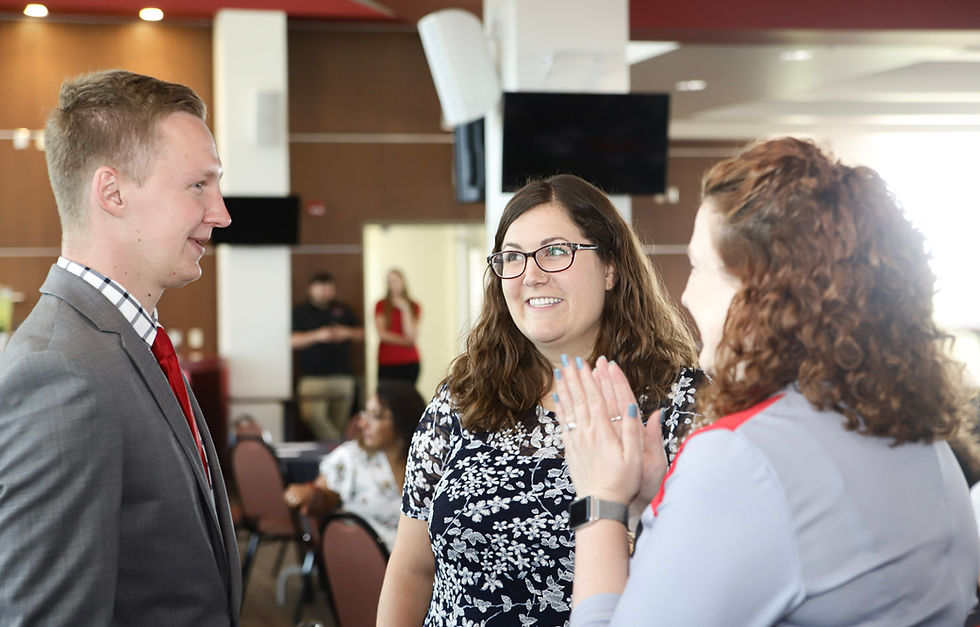
((Tip: Second angle of the same conversation. It tells a story of what is occuring))
Conclusion
Event photography rewards those who are prepared, observant, and willing to learn from every assignment. The combination of experience and a reliable workflow allows photographers to move through events with confidence instead of pressure. For aspiring event photographers, growth comes from showing up consistently, refining your process, and understanding that each event offers a new lesson. When your workflow is steady and your approach is intentional, you create space to focus on storytelling, capturing moments that feel authentic.
_______________
If you’re looking for a professional photographer in Chicago, these resources provide a deeper look at event coverage, workflows, and real-world examples of how professional photography supports universities, businesses, and organizations. Explore the links above to learn more about services, experience, and what to expect when working with a professional photographer in Chicago.


Comments